

Updated September 17, 2026 · Affordable Solar & Pool Heating, LLC · Owner/operator Henry Manna
How each one actually works
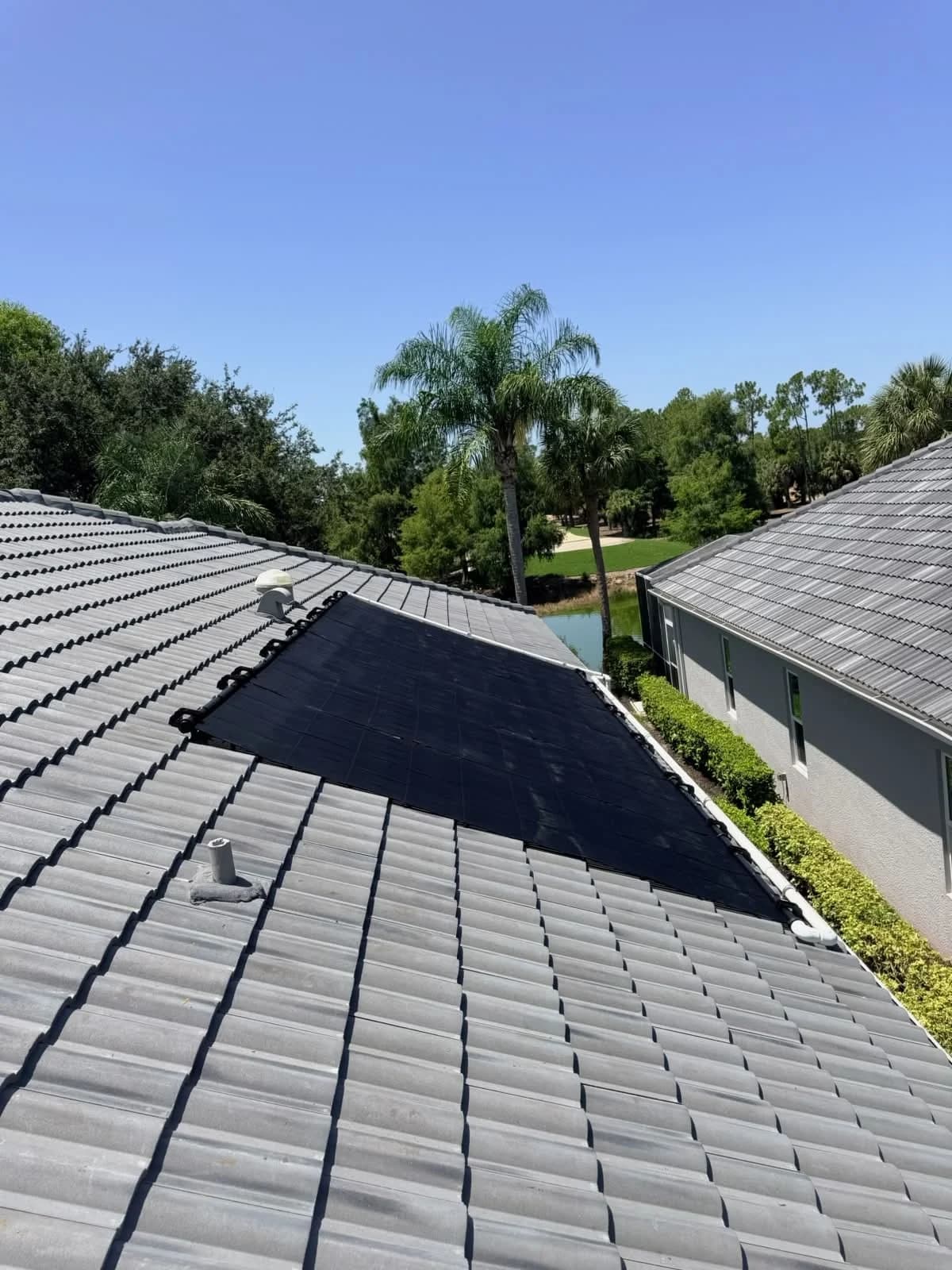
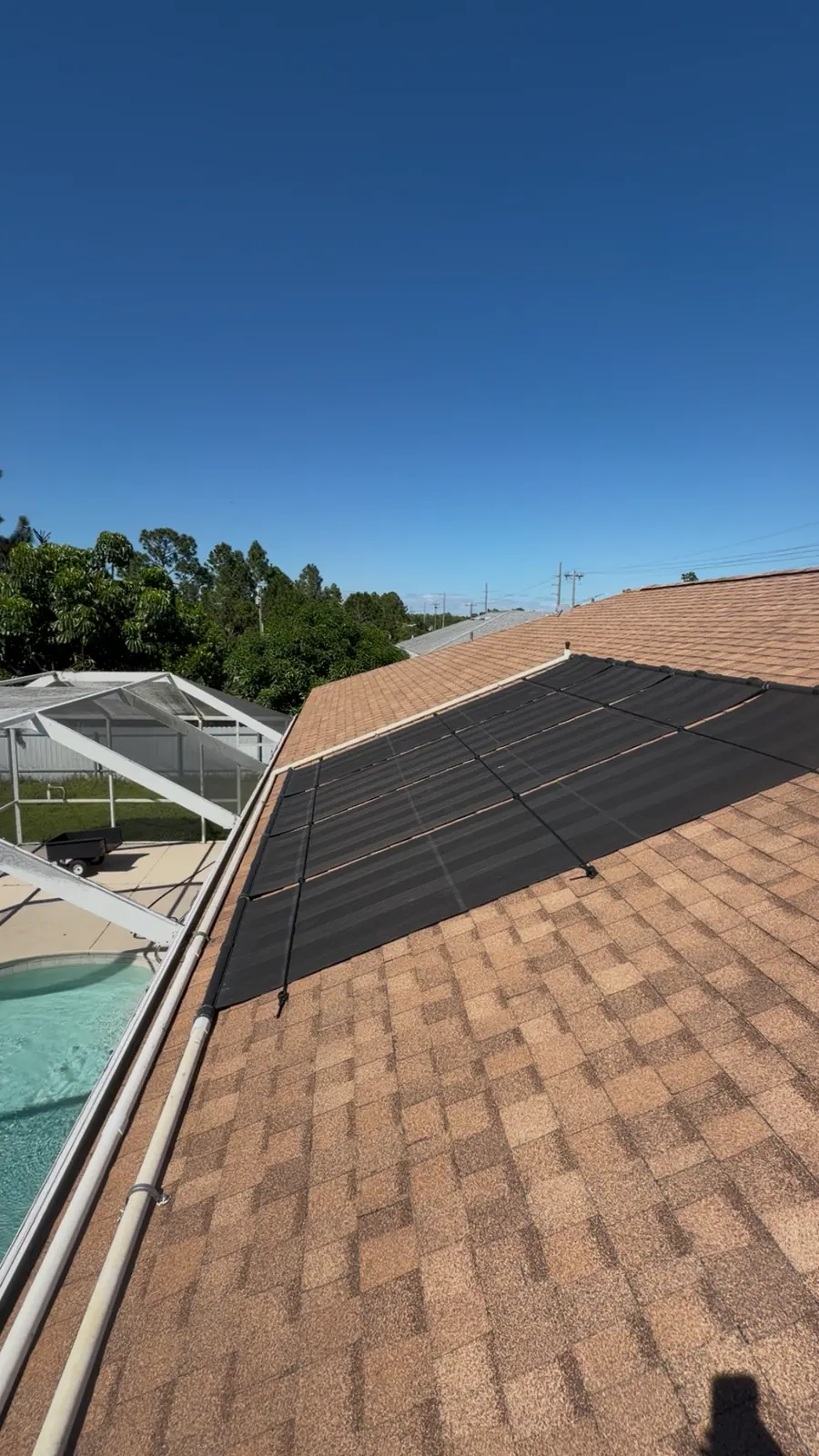
Solar pool heating is the simplest of the three. Your existing pool pump pushes water through collectors on the roof, the sun warms it, and the water returns to the pool a few degrees warmer than it left. There is no combustion and no refrigerant circuit. The only energy it consumes beyond what the pump already uses is whatever extra run time you add to move water through the panels.
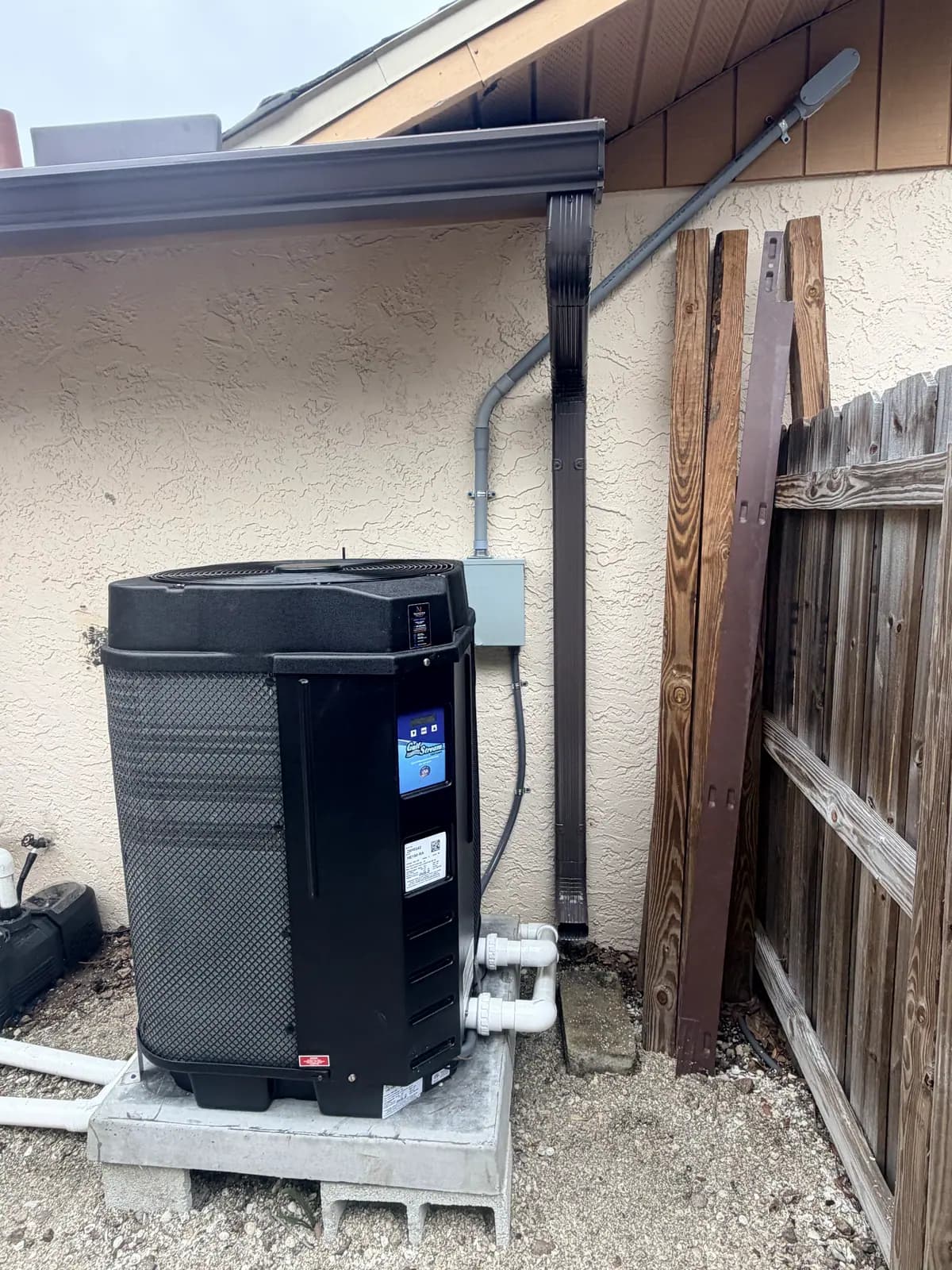
An electric heat pump does not make heat, it moves it. A fan pulls warm, humid outdoor air across an evaporator coil, a refrigerant circuit concentrates that low-grade heat, and a titanium or cupro-nickel exchanger transfers it into the pool water. Because it is relocating heat rather than creating it, it delivers several units of heat for every unit of electricity it draws. GulfStream, for example, publishes a coefficient of performance of 6.0 for the HE150-TA at the industry test condition of 80°F air, 80°F water and 80% relative humidity, and states that its units meet or exceed a COP of 4.0 at the low-temperature test point.
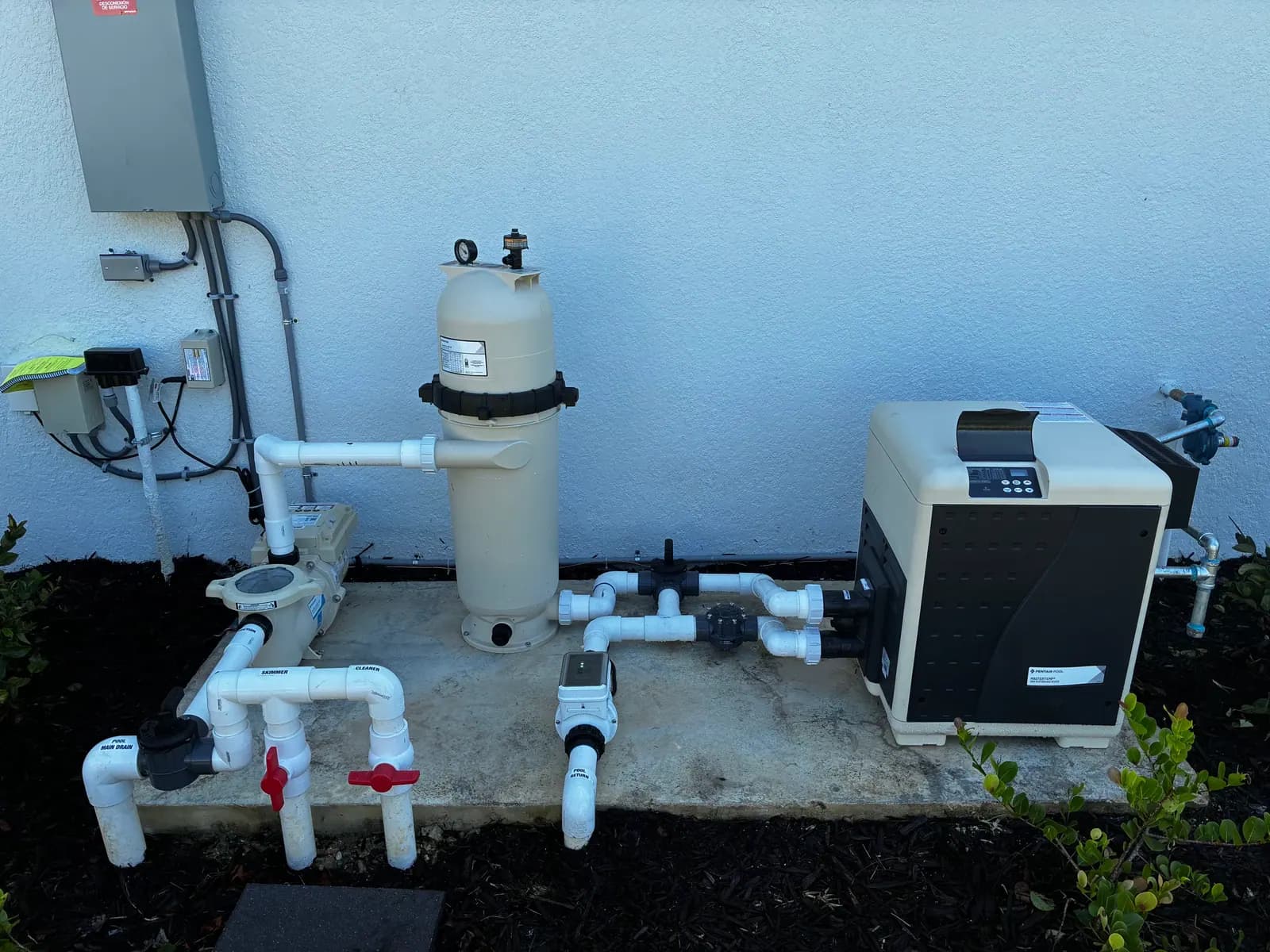
A gas heater burns natural gas or propane in a combustion chamber and pushes that heat straight into the water through a heat exchanger. It is the only one of the three whose output does not depend on the weather. Current gas pool heaters run in the low-to-mid 80 percent thermal efficiency range — Hayward publishes 84% for the 400,000 BTU Universal H-Series, for instance — so roughly 84 cents of every fuel dollar ends up in the pool.
What each one costs to run
This is where the three separate the most, and it is the number that matters over a ten-year ownership period.
Solar has essentially no fuel cost. Once it is paid for, you are running a pump you were already running, possibly for an hour or two longer on cold days. With suitable roof orientation and sun exposure it is one of the lowest-operating-cost ways to heat a pool in Florida, and the operating cost does not move when energy prices do.
A heat pump is the most efficient thing you can plug in. Multiplying every kilowatt-hour into several kilowatt-hours of heat is why a heat pump typically costs a fraction of what the same heating job costs on gas. That advantage is largest exactly when Florida pools are used most — warm, humid air is the fuel a heat pump runs on, and our air is warm and humid for most of the year.
Gas is the most expensive per degree, and it is not close. What you are buying with a gas heater is not cheap heat; it is speed and certainty. Used the way gas is meant to be used — on demand, for a weekend, for a spa — that cost is manageable. Used as an everyday pool heater from November through March, it produces the utility bills that make people call us about a heat pump.
How fast each one heats
Heat-up speed is the single biggest practical difference, and it is the reason all three products still exist.
Gas is measured in hours. A properly sized gas heater on a spa will have it ready while you finish dinner, and it will bring a pool up several degrees in an afternoon regardless of what the weather is doing. A heat pump is measured in a day or two from a cold start — it heats steadily rather than quickly, and it is designed to hold a temperature rather than chase one. Solar is measured in sunny days: it gathers heat whenever the sun is out and gives it back slowly, so it raises the baseline rather than hitting a target on command.
The practical consequence is that a heat pump and a solar system both want to be left alone at a setpoint, while a gas heater rewards being switched on for a specific occasion. Homeowners who treat a heat pump like a gas heater — off all week, on for Saturday — are usually disappointed, and homeowners who treat a gas heater like a heat pump are usually shocked by the bill.
Best use cases
Matched to the right job, all three are good equipment. Here is where each one genuinely wins:
- Solar: a pool used through the spring, summer and fall, with unshaded south- or west-facing roof area available, and an owner who wants the lowest possible operating cost.
- Heat pump: a pool used most weeks of the year at a consistent temperature, with adequate electrical service and a location with clear airflow. This is the default for most Florida homes.
- Gas: an attached spa, a pool used occasionally or seasonally, a rental or second home, or a pool that needs to hit temperature on a schedule regardless of the weather.
- Gas as a backup: a pool with solar or a heat pump as the primary system and gas held in reserve for cold snaps and guests.
What Florida changes
Most national pool heating advice is written for a climate that Florida does not have, and several of the standard tradeoffs come out differently here.
Mild winters favor heat pumps. A heat pump's output falls as the air cools, and the industry's honest caveat is that they lose ground in genuinely cold weather. In Sarasota and the rest of the Gulf Coast, that matters only on a handful of nights. Manufacturers publish where the floor is: the GulfStream HE Series enters a defrost cycle below 48°F ambient and its manual states the unit will not operate below 35°F. On the Gulf Coast those conditions are rare and brief, so a heat pump spends nearly the whole year in the range it was designed for.
Humidity is an asset here. Heat pumps extract heat from the moisture in the air as well as from its temperature, which is why the industry rates them at 80% relative humidity. Florida's humidity makes our heat pumps perform closer to their published numbers than the same unit would in a dry climate.
Salt air and salt pools drive the exchanger and cabinet decision. Coastal Sarasota, Siesta Key, Longboat and the barrier islands are hard on equipment, and a salt chlorine generator adds a second corrosion path from inside the plumbing. That makes the heat exchanger material a real decision rather than a spec-sheet footnote: titanium for heat pumps, and cupro-nickel rather than plain copper for gas heaters. It also means the chlorinator or salt cell belongs downstream of the heater, never upstream.
Screen enclosures change both sides of the equation. A lanai cuts wind, which reduces evaporation, which is the largest way a pool loses heat — good for every heater. But a screen also shades the water and restricts airflow around equipment, so a heat pump inside a cramped enclosure needs its clearances respected. Most manufacturers ask for roughly a foot on the sides and several feet of clear space above the fan; GulfStream specifies 12 inches on each side and a minimum of four feet overhead, and warns against installing in a fully or partially enclosed space at all.
Gas availability is the constraint nobody thinks about until the quote. Large parts of Sarasota and Manatee County have no natural gas at the street. That leaves propane, which means a tank, a delivery contract, and a higher per-degree cost than natural gas. Ruling gas in or out often comes down to a five-minute check of what is available at your address, and it is worth doing before you fall in love with a heater.
Roof exposure decides solar. Florida gives us the sun; what varies house to house is the roof. Tile and metal roofs, mature oaks, tight HOA sightline rules and small roof planes on newer builds all shape whether a solar array can be sized properly. A solar system that only fits half the collector area a pool needs will underperform and disappoint, which is why we size it against the pool's surface area before quoting it.
Combinations that work
The best system on a lot of Gulf Coast pools is not one heater. Pairing solar with an electric heat pump is the setup we install most often for owners who want year-round swimming at a low running cost: solar carries the pool for most of the year at essentially no fuel cost, and the heat pump covers the mornings and cold fronts when the panels cannot keep up. Because solar has already done most of the work, the heat pump runs far less than it would alone.
Solar plus gas is the other pairing worth knowing, and it suits a different owner — one with an attached spa or an unpredictable schedule. Solar handles the pool, gas handles the spa and the occasional cold-weekend rescue, and the gas bill stays small because it is not carrying the pool all winter.
A pool cover, manual or automatic, improves every one of these combinations. Evaporation is the dominant heat loss on an uncovered Florida pool, and a cover is the only accessory that reduces the heating job itself rather than heating the water more efficiently.
How to decide
Work through these in order. The first one that clearly applies usually settles it:
- Do you have an attached spa you want ready in under an hour? You want gas, at minimum for the spa.
- Do you swim most weeks of the year and want a consistent temperature? Start with a heat pump.
- Do you have usable, unshaded roof area and swim mostly spring through fall? Solar will cost less to own than anything else on this list.
- Is your pool used only a few weekends a year, or is it a rental? Gas usually wins on total cost, because the running cost only happens when you use it.
- Is natural gas actually at your street? If not, price propane honestly before comparing it to electric.
- Is the pool on the water or near it, or does it run on salt? Prioritize the heat exchanger material — titanium on a heat pump, cupro-nickel on a gas heater.
- Can you do both? Solar plus a heat pump, or solar plus gas, beats any single heater on running cost if the roof and the budget allow it.
One honest caveat
Every number a manufacturer publishes is measured at a specific test condition, and your pool is not a test condition. Surface area, depth, whether the pool is screened, how windy the lot is, what temperature you actually want and how many hours a day the pump runs all move the result more than the difference between two comparable heaters.
That is why we do not quote a heater from a phone call. If you are on the Gulf Coast, we will look at the pool, the equipment pad, the electrical service and the gas situation before recommending anything — and we will tell you when the right answer is a pool cover and the heater you already own.
Real installations
Recent jobs from our installation library that involve the equipment in this guide.
Heaters mentioned in this guide
GulfStream · GulfStream HE Series
GulfStream HE150-TA Heat/Cool Pool Heat Pump
Model HE150-TA
- Heating capacity
- 135,000 BTU/hr
- Efficiency (COP)
- COP 6.0
- Heat exchanger
- Titanium
- Warranty
- 7-Year Parts / 2-Year Labor
- Wi-Fi / automation
- Automation Compatible (Relay)
A Gulf Coast pool that gets used most of the year and an owner who also wants the option to take the edge off the water in late summer.
Hayward · Universal H-Series
Hayward Universal H-Series H400FDN Gas Pool Heater
Model H400FDN
- BTU input
- 399,900 BTU/hr
- Thermal efficiency
- 84%
- Heat exchanger
- Cupro-nickel
- Warranty
- 3-Year Parts / 1-Year Labor
- Wi-Fi / automation
- App Control via AutomationAutomation Compatible (Relay)
A large Florida pool, or a pool and spa combination, that needs to reach temperature on demand rather than hold it all season.
Last verified September 17, 2026
Specifications and warranty terms are taken from the manufacturer documents below. Manufacturers revise these without notice, so confirm the current terms before you buy. If you spot something out of date, email us and we will fix it.
Sources
- Pentair / GulfStream Heat Pumps — HE Series spec sheet (COP and capacity at 80/80/80)
- Pentair / GulfStream Heat Pumps — HE Series sell sheet (AHRI low test point COP)
- GulfStream Heat Pumps — Installation and User Guide (clearances, defrost and minimum operating temperature)
- Hayward — Universal H-Series brochure (thermal efficiency by model)
Ratings on this site are the editorial opinion of Affordable Solar & Pool Heating, LLC, trading as Modern Pool Heating. How we rate heaters. Corrections: modernpoolheating@icloud.com.