Modern Pool Heating · Owner/operator Henry Manna, Florida Certified Pool/Spa Contractor CPC1460367
Updated October 16, 2026
Short answer
Run a heat pump at a steady setpoint while you are using the pool, and run a gas heater on demand when you want the water warm; with either one, turn the heater down or off when the pool won't be used for several days, which the Department of Energy says saves energy. Most people are comfortable between 78°F and 82°F, and DOE estimates each degree warmer adds 10-30% to heating energy. Year-round heating is realistic on Florida's Gulf Coast with a heat pump, and a pool cover is the biggest saver of all: DOE says savings of 50-70% are possible.
What we usually recommend
If you swim most weeks, we'd usually set a heat pump at the lowest temperature you're comfortable with, schedule the pump so the heat pump can run through the warmer daylight hours, and keep a solar blanket on whenever nobody is swimming. If you're going away for several days, turn it down or off, and turn it back on well before you need the pool, because a heat pump needs time to bring the water back. If you heat with gas, heat for the occasion rather than holding swimming temperature all winter, and never treat it as freeze protection.
- Heat pump: hold a setpoint. Gas: heat when you need it. Either: turn it down or off when the pool won't be used for several days.
- DOE: pools typically run 78-82°F, and each degree warmer costs 10-30% more energy.
- In DOE's Miami estimates, a year-round heat-pump-heated pool costs $1,499 a year at 78°F and $2,514 at 82°F (1,000 sq ft pool, uncovered).
- DOE: a cover can cut heating costs 50-70%, make-up water 30-50% and chemical use 35-60%.
- Sarasota-Bradenton's January average is 62.4°F, so a heat pump spends most winter hours inside its working range.
Should I leave my pool heater running?
It depends on the heater. A heat pump is built to hold a temperature: GulfStream's manual says heat pumps are best used to maintain a set water temperature, that they switch on and off automatically to do it, and that they are not intended to provide fast heating like a gas heater. Heat pumps warm a swimming pool gradually over many hours. Actual heating speed depends on pool volume, heater output, starting water temperature, outdoor air temperature, humidity, wind conditions and whether the pool is covered. So while you are using the pool, leave the heat pump on at your setpoint and let it cycle.
A gas heater is the opposite. It heats quickly and costs the most per degree, so the economical way to run it is on demand: turn it on ahead of when you want to swim or use the spa, and off afterward. Holding a pool at swimming temperature all winter on gas costs several times what a heat pump would for the same heat. For a pool used only occasionally in spring and fall, Pentair's advice is to lower the MasterTemp's pool thermostat to 68°F and leave the heater on, and it warns that running the heater continuously with water below 68°F causes harmful condensation and voids the warranty.
DOE's advice covers both: turn the temperature down or turn the heater off whenever the pool won't be used for several days. DOE calls it a myth that reheating a pool takes more energy than you save by letting it cool. With a heat pump the cost of turning it off is time rather than energy, since GulfStream notes it may take the heat pump some time to bring the pool back, so turn it back on well ahead of when you want to swim.
What temperature should I keep my pool?
DOE says pool water typically runs between 78°F and 82°F. It notes that the American Red Cross recommends 78°F for competitive swimming, which also happens to be a good temperature for fuel savings, and that young children and older swimmers may need 80°F or higher to be comfortable. Most heaters keep separate pool and spa setpoints, so a spa can run hot without the pool doing the same.
Every degree costs more than people expect. DOE estimates each degree of extra temperature adds 10 to 30 percent to heating energy, and says the percentage is higher in warm climates because holding 78°F is relatively cheap to begin with. Its Miami estimates, the closest Gulf Coast example DOE publishes, show the pattern clearly in the table below. These are DOE's assumptions, a large 1,000 square foot pool and energy prices that are now out of date, so read them for the ratios rather than as a bill.
The practical approach is to start a degree or two lower than you think you need and raise it one degree at a time. At 10 to 30 percent a degree, two degrees can be a large share of the bill, so it is worth finding out whether you actually notice them.
| Heater and cover | Held at 78°F | Held at 80°F | Held at 82°F |
|---|---|---|---|
| Heat pump, uncovered | $1,499 | $1,989 | $2,514 |
| Heat pump, with cover | $293 | $409 | $559 |
| Gas, uncovered | $2,910 | $3,880 | $4,905 |
| Gas, with cover | $567 | $796 | $1,090 |
Can I heat my pool year-round in Florida?
Yes, and on the Gulf Coast a heat pump is the usual way to do it. The National Weather Service's 1991-2020 normals for Sarasota-Bradenton put January at an average of 62.4°F, with an average high of 72.5°F and an average low of 52.3°F; December averages 65.2°F and February 64.8°F. DOE says pool heat pumps work efficiently as long as the outside air stays above the 45-50°F range, so most hours of a Sarasota winter are inside it.
The limits are the coldest nights, and manufacturers publish them. GulfStream's HE Series enters a defrost cycle below 48°F ambient and will not operate below 35°F, with reverse-cycle defrost on the heat-and-cool TA models allowing operation into the mid-30s once enabled. Hayward gives the HP21405T an air operating range of 40-115°F, and its low-ambient cutoff clears once the air reaches 60°F. Pentair says the UltraTemp may enter defrost around 50°F, and Raypak's Crosswind V locks out its compressor below a factory-set 45°F. On those nights the pool drifts down and the heat pump catches up once the air warms.
Year-round heating costs more than seasonal heating, which is why the cover matters most for year-round swimmers. Solar can carry a pool through a Florida year only with enough collector area; DOE says 100 percent of the pool's surface for year-round use. DOE notes gas can hold any desired temperature regardless of the weather, but year-round on gas is the expensive route.
Does a pool blanket really save money?
Yes, and by more than any other single change. DOE says evaporation is by far the largest source of energy loss from a pool: it takes 1 BTU to raise a pound of water 1°F, but each pound of 80°F water that evaporates takes 1,048 BTU out of the pool. Covering a pool when it is not in use is, in DOE's words, the single most effective means of reducing pool heating costs, with savings of 50 to 70 percent possible. DOE adds that covers reduce make-up water by 30 to 50 percent and chemical use by 35 to 60 percent, and cut cleaning time.
DOE's Miami tables show the size of the effect: a heat-pump-heated pool held at 80°F all year drops from $1,989 to $409 a year with a cover, and a gas-heated one from $3,880 to $796. DOE is also blunt that a cover saves nothing if it stays folded up, so how easy it is to put on and take off matters as much as the material. Options run from a plain manual cover to a reel on wheels, semi-automatic and fully automatic covers.
The usual low-cost choice is a bubble, or solar, cover: thicker than packing bubble wrap and UV-stabilized. Vinyl covers are heavier and last longer, and insulated vinyl covers add a layer of foam. DOE says an outdoor pool absorbs 75 to 85 percent of the sunlight that strikes it; a transparent bubble cover reduces that by only 5 to 15 percent, while a fully opaque cover reduces it by 20 to 40 percent.
When to cover depends on when you swim. DOE's advice for daytime swimmers is to take the cover off just before swimming and put it back as soon as you are done. For night-only swimmers it is a balance: in warm, humid conditions evaporation slows, and DOE says it may be better to leave the cover off during the day to collect sun, while in dry or windy weather a transparent cover on during daylight is usually the better call.
Covers and solar heating together
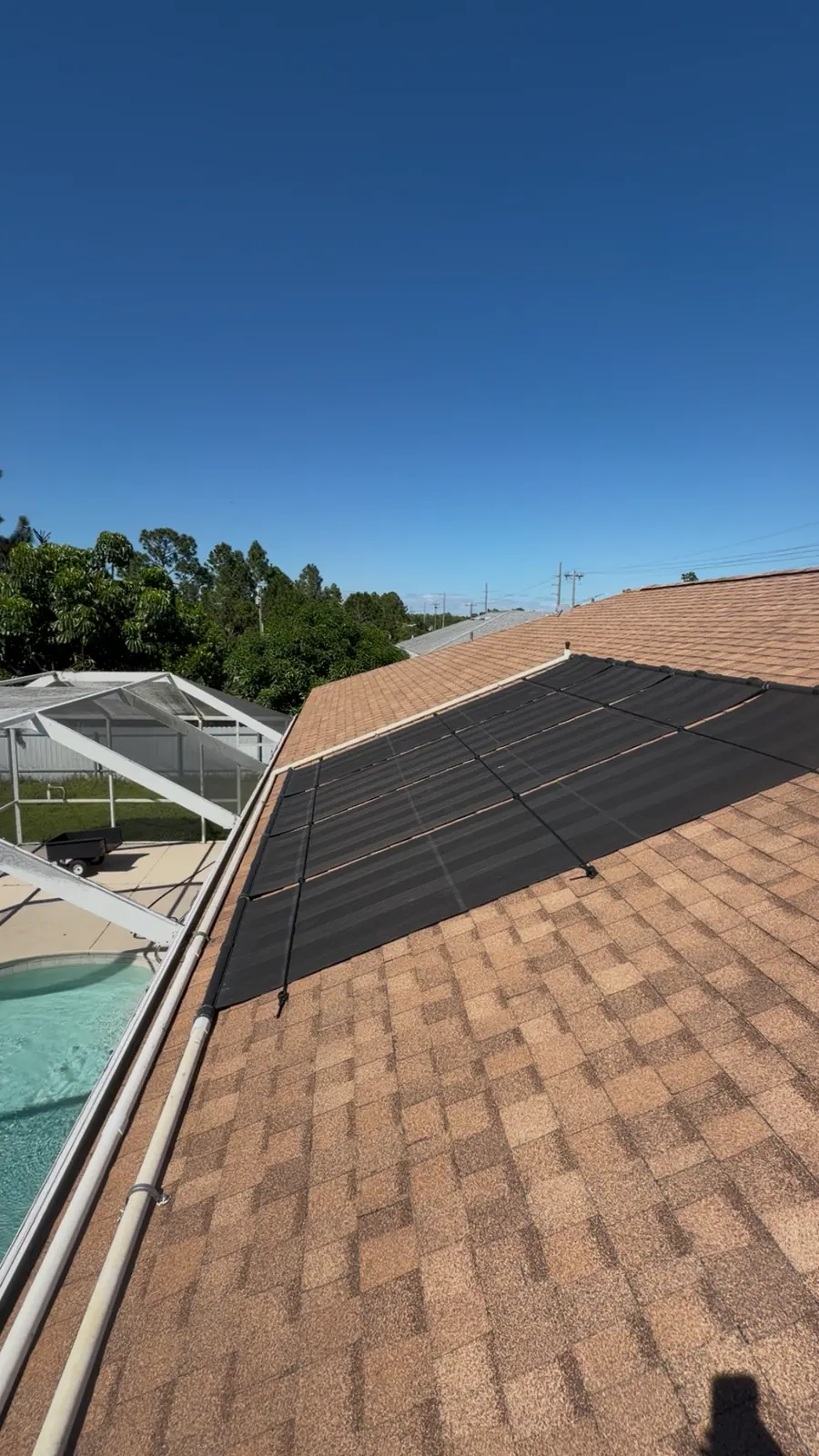
A cover and a solar system work well together. DOE says using a cover can help reduce the size of a solar pool heating system, and that in any climate you can usually decrease the collector area you need by using one. A transparent bubble cover still lets most of the sun through, so the pool keeps gaining heat while the cover holds it in.
Solar only heats while the pump is pushing water through the collectors, so the pump schedule has to cover the sunny part of the day. DOE describes how controlled systems work: sensors and an automatic valve divert water through the collectors when they are sufficiently warmer than the pool, and let it bypass them when they are not. Our cost guide puts the extra pump time at about 60 kWh a month for two extra hours a day on a 1 kW pump, roughly $9 at Florida's average electric rate.
In August the same equipment can work in reverse. DOE notes that in hot climates the collectors can cool a pool during peak summer by circulating water through them at night.
Run times: the heater only works while the pump runs
No heater warms water that is not moving through it. Every heater has a minimum flow, and on a variable-speed pump the heating speed has to meet it: GulfStream specifies 30 to 70 GPM with 45-50 GPM optimal, Hayward's HP21405T 30 to 75 GPM with 60 recommended, Pentair's MasterTemp 25 GPM minimum on the 250 and 40 GPM on the 400, and Hayward's Universal H-Series 25 or 30 GPM depending on size. GulfStream's troubleshooting section lists pool pump run time among the first things to check when a pool heats slowly.
Timing matters for a heat pump too. GulfStream's manual suggests running the heat pump during the warmer daylight hours to take advantage of the sun, noting it keeps working when the temperature drops at night but at lower efficiency. In practice that means scheduling the pump to cover late morning through late afternoon in winter, and keeping the cover on overnight when the pool loses the most heat.
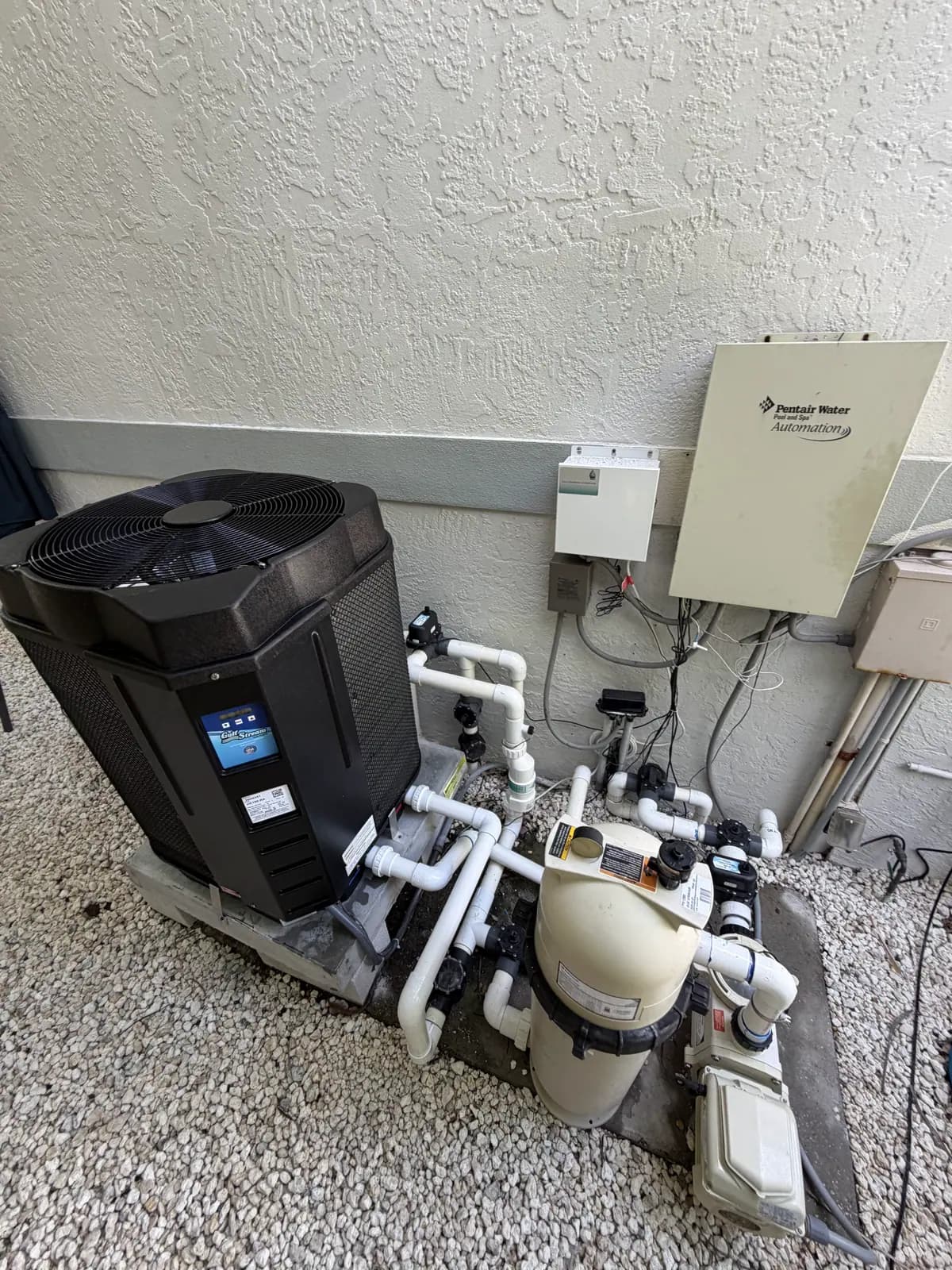
If the pad has automation, the heater and the pump schedule can be tied together so the heater only calls for heat when the pump is running at the right speed. Our article on Wi-Fi and automation covers which heaters integrate with which systems.
Vacation and seasonal settings
Away for several days: turn the heater down or off, per DOE, and cover the pool. GulfStream adds two maintenance notes for heat pumps that sit unused: run the heat pump at least 30 minutes a month to keep its mechanical parts in good condition, and in areas where freezing is not common, keep water flowing through the heat pump even when it is not heating.
Freezes are rare in our four counties, but they do happen, and manufacturers exclude freeze damage to heat exchangers from warranty. A gas heater is not freeze protection; Pentair is explicit about the 68°F condensation limit on the MasterTemp. If a hard freeze is forecast and the home is empty, have someone confirm the pump is circulating, or ask your pool service how they handle it.
After a storm, treat flooded equipment with suspicion. Peoples Gas advises that gas appliances which may have been flooded or damaged should be inspected and serviced by a qualified plumber or appliance-service contractor before anyone operates them, and the same caution makes sense for a heat pump whose controls sat in water.
Pros and cons
Hold a setpoint (heat pump)
Pros
- The water is warm whenever you want to swim.
- The heat pump works the way it was designed to, mostly during the warmer daylight hours.
- No long recovery after every cold front.
Cons
- You pay to hold temperature on days you do not swim.
- Running cost depends heavily on using a cover.
Heat on demand (gas)
Pros
- You only pay when you use the pool or spa.
- Reaches temperature in hours, and a spa in minutes.
Cons
- The highest cost per degree of any heater type.
- Needs planning ahead of when you swim.
- Pentair warns against running a MasterTemp continuously with water below 68°F.
Turn the heater off between uses
Pros
- Saves the most energy; DOE says reheating does not cost more than you save.
- The right setting when the pool won't be used for several days.
Cons
- With a heat pump, recovery takes time, so it suits trips better than weekday breaks.
- Uncovered pools lose temperature quickly while the heater is off.
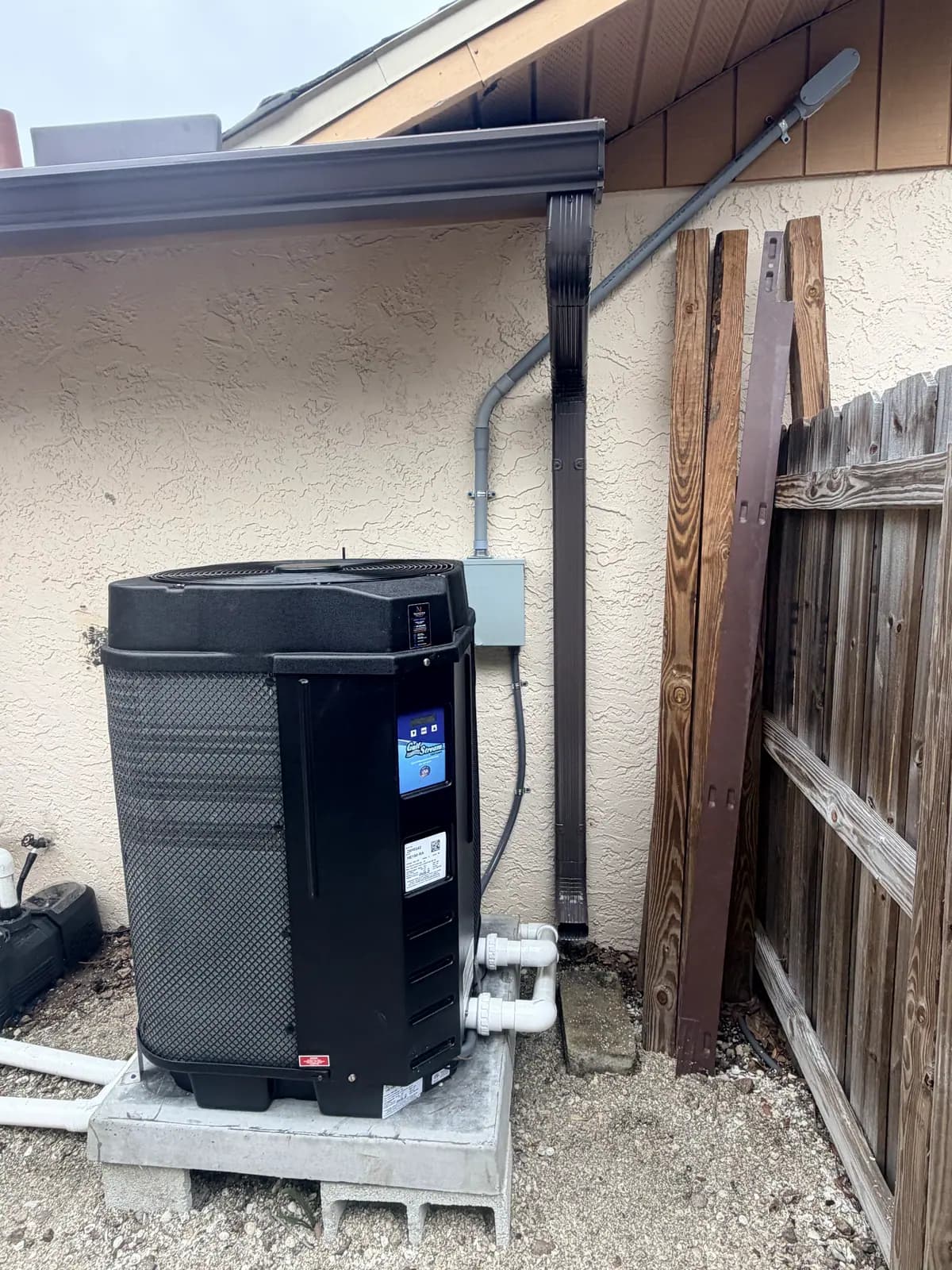
Real installations
Recent jobs from our installation library that relate to this topic.