Modern Pool Heating · Owner/operator Henry Manna, Florida Certified Pool/Spa Contractor CPC1460367
Updated October 16, 2026
Short answer
There is no single best pool heat pump for Florida, but the right ones share a profile: a titanium heat exchanger, roughly 110,000 to 140,000 BTU/hr of heating capacity for a typical residential pool, an electrical load your panel can carry, and a warranty someone nearby will actually honor. The two brands that appear most on our own recent installs are GulfStream, whose HE Series is built in North Fort Myers, and Hayward. AquaCal and Built Right, both Florida-built, are worth pricing when warranty structure or built-in Wi-Fi matters more than the brand on the pad.
What we usually recommend
If your pool is screened, average-sized and your electrical panel is tight, we would usually start with a GulfStream HE110-RA or HE125-RA. If the pool is large, unscreened or on the water, we would look at the 135,000 to 140,000 BTU/hr class (GulfStream HE150-RA, Hayward HP21405T, Built Right BR135XW, AquaCal SQ200R) and check that the panel can take the circuit. If your pad already runs Hayward Omni, the HeatPro joins it through a relay; if you want phone control without buying an automation system, AquaCal and Raypak build Wi-Fi into the heater. If August is your problem rather than January, read the heat-and-cool guide before you choose.
- Every heat pump in our heater comparison uses titanium on the water side. It is the baseline for a Florida pool, not an upgrade.
- Capacity at 50°F air, not the 80°F headline, is what you feel in January. Hayward, AquaCal, Built Right, Jandy, Raypak and Thermeau publish it; GulfStream publishes only a COP floor at that test point.
- The electrical circuit often decides the model: 37 A minimum circuit amps on a GulfStream HE150-RA, 42.5 A on a Hayward HP21405T, and 50 A at 230 volts on a Jandy JRT4001R.
- Warranty terms vary more than capacity does, and buying through the wrong channel can cut most of them to one year of parts. Compare the exact terms side by side.
What makes a heat pump right for a Gulf Coast pool
Florida is good heat pump country. Our air is warm and humid most of the year, and a heat pump pulls its heat out of that air. The Department of Energy says heat pump pool heaters work efficiently as long as the outside temperature stays above the 45°F to 50°F range, which describes most hours of a Sarasota winter. So the question is rarely whether a heat pump will work here. It is which one suits your pool, your equipment pad and your electrical service.
We weigh six things, roughly in this order. The water-side heat exchanger, because salt pools and salt air are normal here. Heating capacity at 50°F air, because that is the number you live with during a cold front. The electrical circuit the unit needs. The warranty terms and who performs warranty work locally. How the unit is controlled, including whether it can join your automation. And where it sits on price relative to the rest of the field, which this site shows as a relative tier rather than a dollar figure.
Two things do not separate the serious contenders. Titanium is one: every heat pump in our heater comparison uses it. The 80/80/80 headline capacity is the other: most of the 140,000 BTU-class units land within a few thousand BTU/hr of each other at that test point, so the real differences are in the columns most shoppers skip.
The heat pumps in our heater comparison, side by side
Every figure below comes from the manufacturer's own documents at the test conditions the manufacturer states. Capacity and COP are at 80°F air, 80°F water and 80% relative humidity unless the row says otherwise. Where a manufacturer does not publish a figure, the table says so rather than filling the gap.
Read the 50°F column before the 80°F one. Across the brands that publish it, capacity at 50°F air runs roughly a third below the headline, and efficiency falls to a COP of about 4.0. Our pool heat pump sizing guide explains why that column, not the headline, should set the size. GulfStream is the odd one out: Pentair states every HE model meets or exceeds a COP of 4.0 at the 50°F test point but publishes no capacity figure there, so we cannot print one.
The Moov Inverter line is the only modulating inverter in the table. Moov publishes an average COP across the compressor's speed range rather than a figure at the industry test point, so its efficiency claim cannot be set beside the others like for like.
| Model | Heating capacity, 80/80/80 | COP, 80/80/80 | Capacity at 50°F air | Heat only or heat and cool | Minimum circuit amps / breaker |
|---|---|---|---|---|---|
| GulfStream HE110-RA | 110,000 BTU/hr | 6.1 | n/p (COP 4.0 or better stated) | Heat only | 37 A / 40 A maximum |
| GulfStream HE125-RA | 118,000 BTU/hr | 6.0 | n/p (COP 4.0 or better stated) | Heat only | 37 A / 50 A maximum |
| GulfStream HE150-RA | 138,000 BTU/hr | 6.0 | n/p (COP 4.0 or better stated) | Heat only | 37 A / 50 A maximum |
| GulfStream HE150-TA | 135,000 BTU/hr | 6.0 | n/p (COP 4.0 or better stated) | Heat and cool | 40 A / 50 A maximum |
| Hayward HeatPro HP21405T | 138,000 BTU/hr | 5.7 | 82,000 BTU/hr at COP 4.0 | Heat only | 42.5 A / 50 A recommended, 70 A maximum |
| Hayward HeatPro HP31405T | 135,000 BTU/hr | 5.7 | 82,000 BTU/hr at COP 4.0 | Heat and cool | 42.5 A / 50 A recommended, 70 A maximum |
| AquaCal HeatWave SuperQuiet SQ140R | 114,000 BTU/hr | 5.7 | 72,000 BTU/hr at COP 4.0 | Heat and cool | 38.5 A / 60 A maximum fuse |
| AquaCal HeatWave SuperQuiet SQ200R | 138,000 BTU/hr | 6.1 | 88,000 BTU/hr | Heat and cool | 42.1 A / not in our record |
| Built Right BR135XW | 135,000 BTU/hr | 6.0 | 82,000 BTU/hr at COP 4.0 | Heat only (BR135XW H/C heats and cools) | Sized from the unit's data label; not published online |
| Pentair UltraTemp 140 H/C | 140,000 BTU/hr | 5.6 | n/p (COP 4.0 stated) | Heat and cool | 43 A / 50 A recommended fuse, 70 A maximum |
| Raypak Crosswind V 8550EHC | 137,000 BTU/hr | 5.8 | 85,000 BTU/hr at COP 4.1 | Heat and cool | 46 A minimum recommended / 60 A recommended breaker |
| Jandy VersaTemp JRT3000R | 130,000 BTU/hr | 5.8 | 82,000 BTU/hr at COP 4.0 | Heat and cool | 40 A / 50 A maximum |
| Jandy VersaTemp JRT4001R | 160,000 BTU/hr | 5.9 | 101,000 BTU/hr at COP 4.4 | Heat and cool | 50 A at 230 V (55 A at 208 V) / 70 A maximum |
| Thermeau Prestige TH125 | 121,000 BTU/hr | 5.5 | 80,000 BTU/hr at COP 4.0 | Heat and cool | 42.5 A / 70 A maximum |
| Moov Inverter MI900 | 82,000 BTU/hr (published) | Average of 8 claimed across the speed range | n/p | Heat only | 30 A breaker |
Capacity tiers: which size class suits which pool
Heat pumps are sized on the pool's surface area and the temperature rise you are asking for, not on gallons, and the manufacturers' models fall into a few clear classes. The 110,000 to 121,000 BTU/hr class covers the GulfStream HE110-RA and HE125-RA, the AquaCal SQ140R, Built Right's BR115XW at 117,000 BTU/hr and Thermeau's TH125. These suit screened, average-sized pools, and they ask the least of the electrical panel. The HE110-RA, for example, needs a 40 amp maximum breaker, the smallest in the GulfStream line.
The 130,000 to 140,000 BTU/hr class is where most large, unscreened and waterfront pools end up: GulfStream's HE150-RA and HE150-TA, Hayward's HP21405T and HP31405T, the Built Right BR135XW, AquaCal's SQ200R, Raypak's Crosswind V, Pentair's UltraTemp 140 H/C and Jandy's JRT3000R. Heat pumps warm a swimming pool gradually over many hours. Actual heating speed depends on pool volume, heater output, starting water temperature, outdoor air temperature, humidity, wind conditions and whether the pool is covered. Extra capacity on a heat pump mostly buys recovery time after a cold front; it does not make the water warmer day to day. Above that, Jandy's 160,000 BTU/hr JRT4001R is a single-phase unit that can stand in where a large pool would otherwise be quoted two heat pumps.
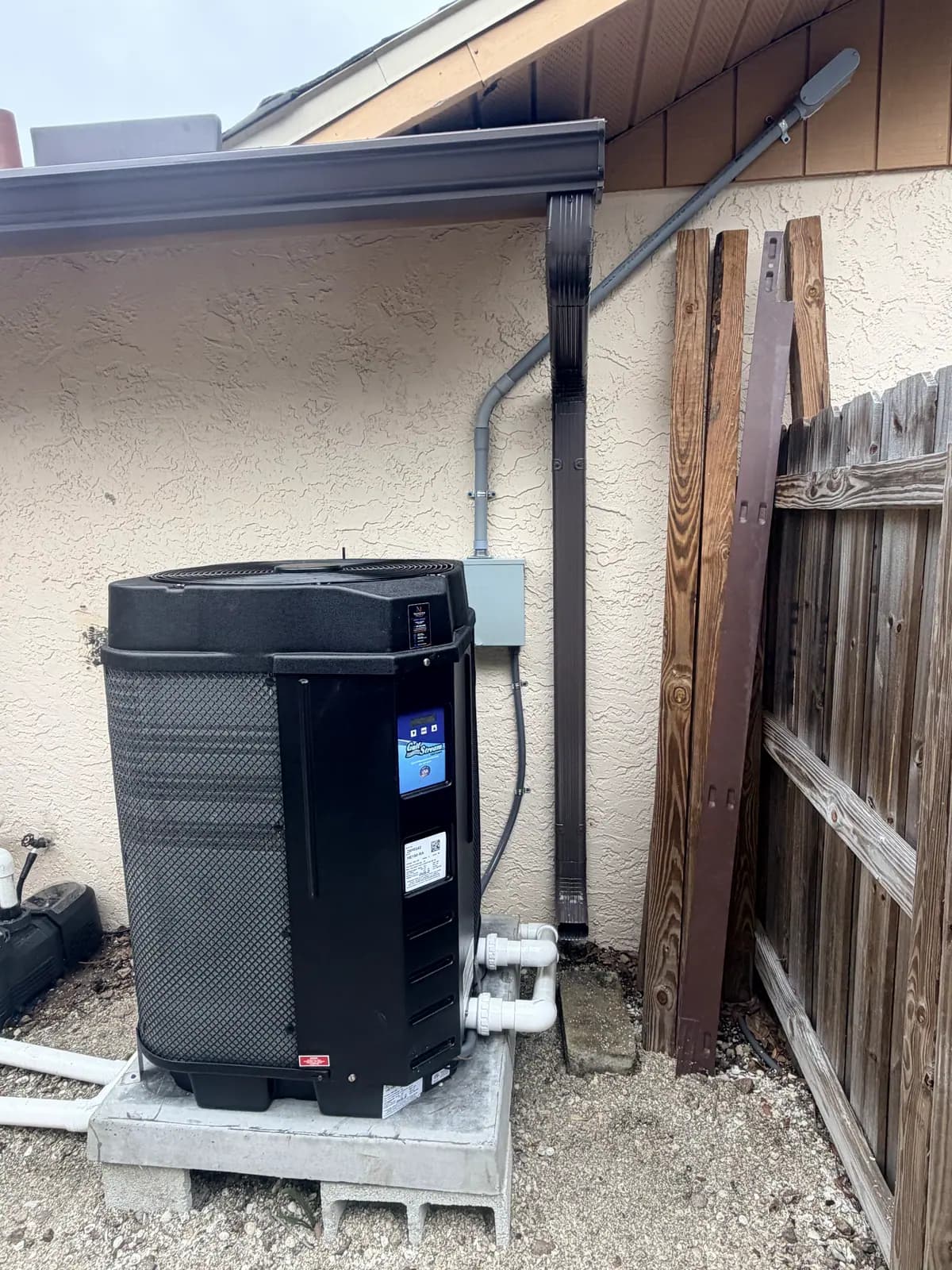
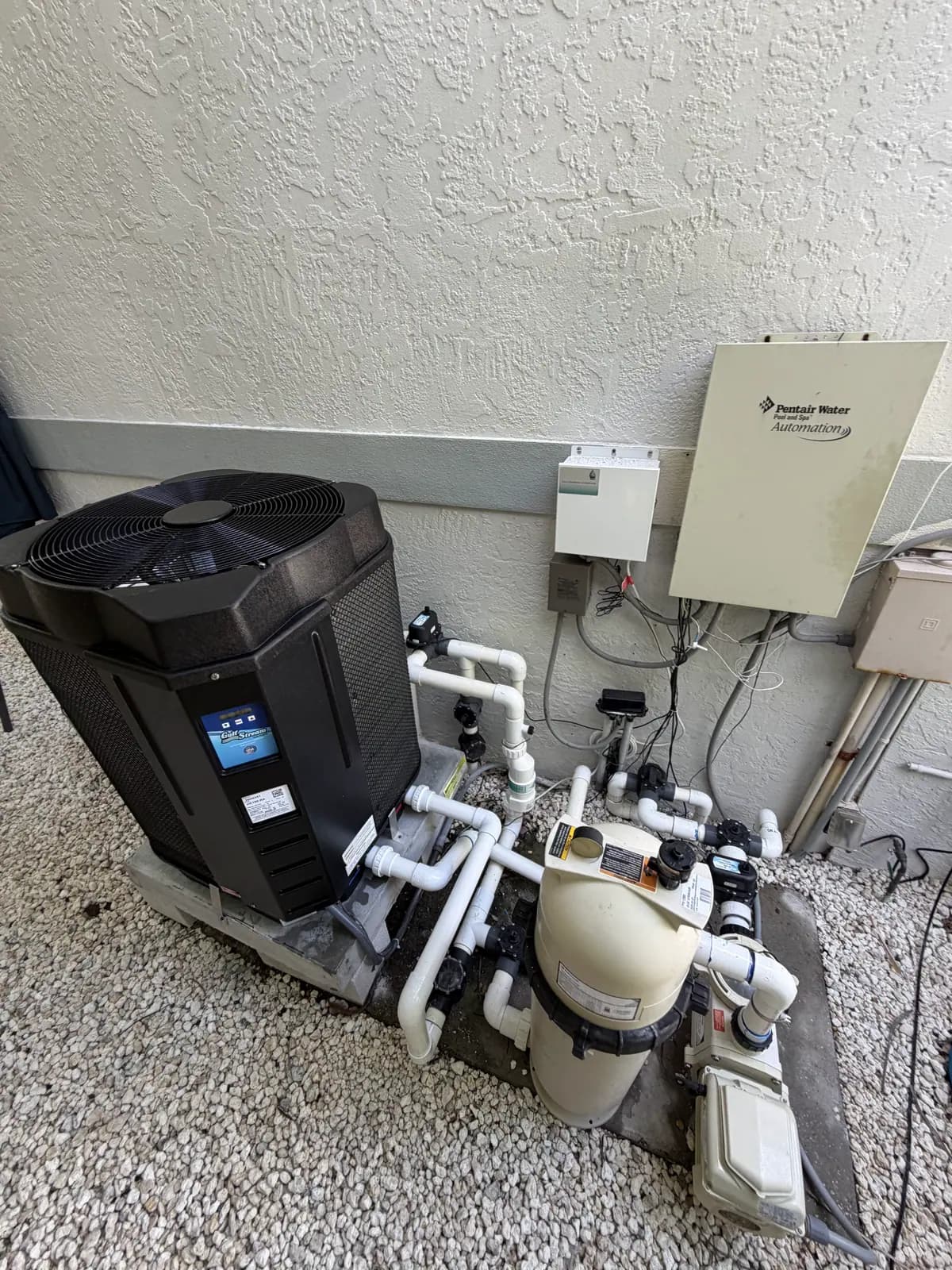
Our own jobs show both ends. In Punta Gorda we set a GulfStream HE110-RA, the entry model in the HE line, beside the house; in Dunedin, Tampa, Siesta Key and Treasure Island we installed the HE150-RA, the largest heat-only unit in the line. The 100K versus 140K article walks through how we choose between the two classes, and the sizing guide has the formula.
Warranty terms side by side
This is where these heat pumps differ most, and where the fine print matters most. The table states each manufacturer's published terms and the conditions that change them. We have not ranked them: the right one depends on which component worries you and who will do the work when something fails.
Two habits protect you whichever brand you choose. Buy through a channel the manufacturer recognizes, because nearly every one of these warranties shrinks to one year of parts, or disappears, for internet purchases and unauthorized sellers. And ask for the warranty document by name or revision for your exact model number, because three of the brands below (GulfStream, AquaCal and Built Right) have conflicting documents in circulation.
| Model / line | Parts | Labor | Compressor / heat exchanger | Conditions worth knowing |
|---|---|---|---|---|
| GulfStream HE Series | 7 years | 2 years (no trip charges during the labor period, per the sell sheet) | No separate exchanger term; covered under parts | Pentair's cross-brand warranty table lists shorter terms; internet purchase gets 1 year parts only; service through an authorized service center |
| Hayward HeatPro MCHX | 5 years | 2 years field labor (3 years through a Hayward Rewards dealer) | Titanium tube 10 years (in-ground) | W3-prefixed Open Line SKU sold online: 1 year parts only, no labor |
| AquaCal HeatWave SuperQuiet | 3 years, then years 4-5 limited parts on compressor, heat exchanger and evaporator coil | 3 years on-site | Limited lifetime, part only, on the titanium tubing | AquaCal's two 2026 warranty documents disagree on trip charges; authorized dealer and prior authorization required |
| Built Right XW Series | 5 years | 5 years on-site | Exchanger covered for the warranty term | Licensed contractor install; manual's warranty sheet adds registration within 30 days and prior authorization; Florida-only vs 50-state wording differs between documents |
| Pentair UltraTemp 140 H/C | 2 years | 2 years | Compressor 10 years parts and labor; titanium exchanger lifetime | Registration required; internet purchase gets 1 year parts only |
| Raypak Crosswind V | 7 years | 2 years | Titanium tube 10 years parts, 2 years labor | Authorized U.S. dealer only; travel time and freight not covered |
| Jandy VersaTemp | 2 years | Not covered | Compressor and heat exchanger 5 years | No labor coverage; e-commerce purchases excluded |
| Moov Inverter | 5 years | 3 years | Heat exchanger 10 years | Claims approved by an authorized Moov employee; first installation only |
| Thermeau Prestige / Signature | 5 years / 7 years | 5 years / 2 years | 10-year corrosion protection on the titanium exchanger | No registration required (keep the invoice); confirm a local service dealer |
Controls, Wi-Fi and automation
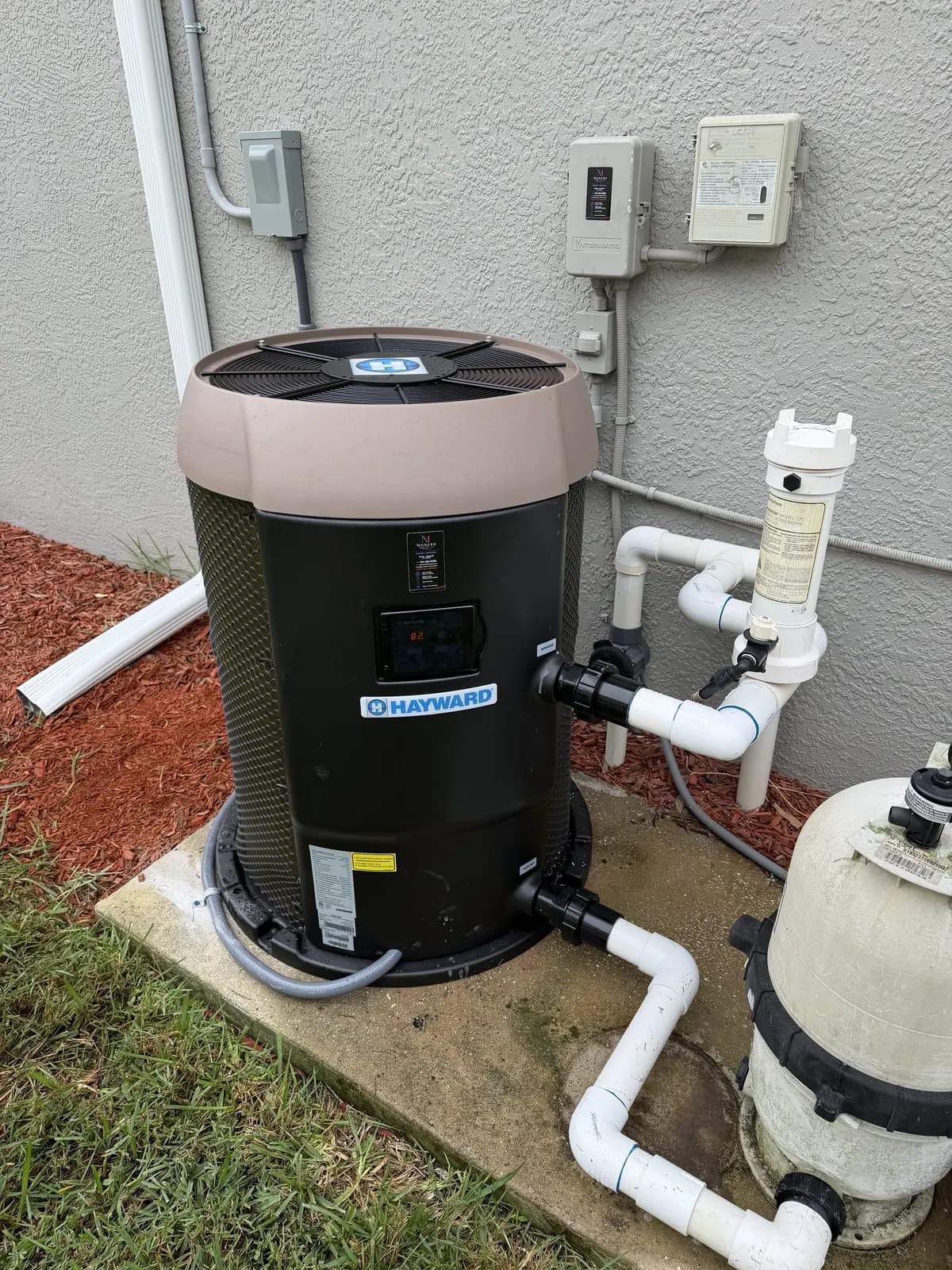
Controls are where the field splits into camps. GulfStream gives you a clear LCD that reports faults in plain language, but its manual states the heat pump cannot be connected to automation over RS-485, and Pentair publishes no app or Wi-Fi for it: automation is dry contact only. Hayward's HeatPro takes a two-wire relay (terminal J7, plus J28 for cooling on the HP31405T), which is how it joins a Hayward Omni system. Pentair's UltraTemp documents an RS-485 connection to IntelliTouch and EasyTouch and uses dry contacts for everything else. Jandy's VersaTemp joins a Jandy AquaLink RS system over RS-485.
If you want the heater itself on your phone without an automation panel, the list narrows quickly: AquaCal builds PoolSync Wi-Fi into the SuperQuiet, Raypak builds Raymote Wi-Fi into the Crosswind V, and Moov publishes Wi-Fi setup and an app for its Inverter line. Built Right and Thermeau publish no app. The Wi-Fi and automation article goes model by model, including what each kind of connection can and cannot do.
One of our Siesta Key installs shows the most common Florida situation: a heat-only GulfStream HE150-RA on a pad that also carries a Pentair automation panel. The HE150-RA connects to automation through dry-contact remote thermostat terminals, not a Pentair data connection, so if the automation brand matters to you, decide that before you choose the heat pump.
Best heat-and-cool pool heat pump
Most of the lines above offer a reverse-cycle model that can chill the pool as well as heat it: GulfStream's TA models, Hayward's HP31405T Heat+Chill, Pentair's UltraTemp H/C, Jandy's VersaTemp (chilling is standard on every JRT model), Raypak's EHC models, AquaCal's ICEBREAKER units, Built Right's BR135XW H/C and most of Thermeau's Prestige line. Within a line, the heat-and-cool unit usually gives up a little heating capacity: GulfStream rates the HE150-RA at 138,000 BTU/hr and the HE150-TA at 135,000 at the same test point.
Very few of them publish a cooling capacity. Pentair does, at 71,000 BTU/hr and COP 4.1 for the UltraTemp 140 H/C; Hayward and Jandy publish 40°F chilling claims (Jandy's for a cold plunge of about 800 gallons or less); most others publish nothing. Rather than repeat it here, our heat-and-cool guide covers which pools actually need cooling, what the reversing valve costs you, and when we talk people out of it. The short version: if you mainly want winter heat, buy the heat-only model.
Florida-built options
Three of the brands in our heater comparison record Florida manufacturing. GulfStream units are built by G&F Manufacturing in North Fort Myers, according to the installation manual Pentair hosts, although the brand is now owned and supported by Pentair. AquaCal builds in St. Petersburg, and its brochure says it has produced heat pumps since 1981. Built Right builds in Punta Gorda and says most of its Florida service work is done by its own factory technicians. Thermeau keeps a U.S. office in Apopka but describes a Canadian-based factory.
Where a heat pump is built matters less than who fixes it, but on the Gulf Coast the two often go together. We compare the three Florida builders on warranty, controls and service in a separate article.
What matters more than the brand: the installation
A good heat pump installed badly performs like a bad one. The manufacturers want open air around the unit: GulfStream asks for 12 inches on each side and four feet above, and warns that sheds, garages and low overhangs recirculate cold discharge air and can push the unit into defrost. The manuals we have read publish a water flow window, which a variable-speed pump has to be programmed to sit inside while the heater runs, and they put the salt cell or chlorinator downstream of the heater.
The pad and the panel come next. On a Tampa job there was no pad where the heat pump needed to go, so the crew built a level base from concrete block in a gravel side yard first. On Treasure Island the pad sits up out of a rock bed so rain and irrigation drain away from the base. And on older Sarasota and Bradenton homes the electrical panel is often what decides between a 40 amp and a 50 amp unit. Our electrical, bypass and placement article covers all of this in detail.
Is it right for you?
Good fit if
- You swim most months of the year and want the pool held at a steady temperature.
- Your pool runs on salt or sits near the water, where titanium and a non-metallic cabinet earn their keep.
- You want one of the lowest-cost powered ways to heat a pool, and you can wait for gradual heat.
- Your panel can take a dedicated 208-230 volt circuit in the 40 to 50 amp range, or you are prepared to upgrade it.
Look elsewhere if
- You want an attached spa hot in under an hour. Gas does that job; a heat pump does not.
- You only heat occasionally from cold for a weekend, which plays to gas rather than a heat pump.
- The only place for the unit is an enclosed equipment room, a shed or under a low overhang.
- Your electrical service cannot carry the circuit and a panel upgrade is not an option.
Pros and cons
GulfStream HE Series (HE110-RA to HE150-TA)
Pros
- Built in North Fort Myers by G&F Manufacturing.
- COP 6.0 at 80/80/80 (6.1 on the HE110-RA) and a stated COP floor of 4.0 at the 50°F test point.
- Titanium exchanger in a UV-stabilized ABS cabinet that cannot rust.
- 7 years parts and 2 years labor published, with no trip charges during the labor period per the sell sheet.
- Modest circuit: 37 A minimum circuit amps on every RA model.
Cons
- Automation is dry contact only; no RS-485, app or Wi-Fi published.
- No published capacity at 50°F air.
- Pentair's cross-brand warranty table contradicts the sell sheet; get terms in writing.
- Heat-only RA models do not have reverse-cycle defrost.
Hayward HeatPro MCHX (HP21405T / HP31405T)
Pros
- Publishes capacity at 50°F air: 82,000 BTU/hr at COP 4.0.
- Titanium tube covered for 10 years on in-ground units.
- Joins a Hayward Omni system through its two-wire relays.
- TCP-coated microchannel air-side coil that Hayward positions as corrosion protection.
Cons
- Larger circuit: 42.5 A minimum circuit ampacity, 50 A recommended breaker.
- Hayward's manual calls for an external bypass assembly.
- No Wi-Fi or app on the heat pump itself.
- The W3-prefixed online SKU carries 1 year parts only.
AquaCal HeatWave SuperQuiet (SQ140R to SQ200R)
Pros
- Built in St. Petersburg by a heat-pump specialist.
- PoolSync Wi-Fi built in, with heating, cooling and remote diagnostics.
- ICEBREAKER heat and cool across the line.
- ThermoLink titanium exchanger with a published 2 PSI pressure drop at 45 gpm.
Cons
- Upper mid-range price tier.
- Two current warranty documents disagree on trip charges.
- Years 4-5 are limited parts coverage only.
- Its own ecosystem rather than a native device in Pentair, Hayward or Jandy automation.
Built Right XW Series (BR115XW / BR135XW / BR135XW H/C)
Pros
- 5 years of parts and on-site labor on the current warranty page.
- Built in Punta Gorda, with factory technicians doing most Florida service.
- Titanium exchanger in a corrosion-free polymer housing.
- COP 6.5 on the BR115XW and 6.0 on the BR135XW at 80/80/80.
Cons
- No app, Wi-Fi or published automation integration.
- Sold through licensed contractors only.
- Breaker size is printed on the unit's data label rather than published online.
- Built Right's documents disagree on whether coverage is Florida-only or 50-state.
Real installations
Recent jobs from our installation library that relate to this topic.